
Your sense of smell is essential to your interaction and connection with your environment. Recent discoveries have posited that loss of the sense of smell may be early signs of Dementia or Parkinson’s Disease.
If you have noticed a diminishing sense of smell, it is important to share that with your health professional. See an otolaryngologist to rule out underlying physical conditions that may be causing anosmia [aˈnäzmēə] (loss of sense of smell)
The areas of the brain responsible for your sense of smell are among the most neuroplastic in the brain, with a lifelong ability to form new neurons. It is thought that you can improve your sense of smell through smell training, lifestyle adjustments, and addressing underlying nasal or health issues.
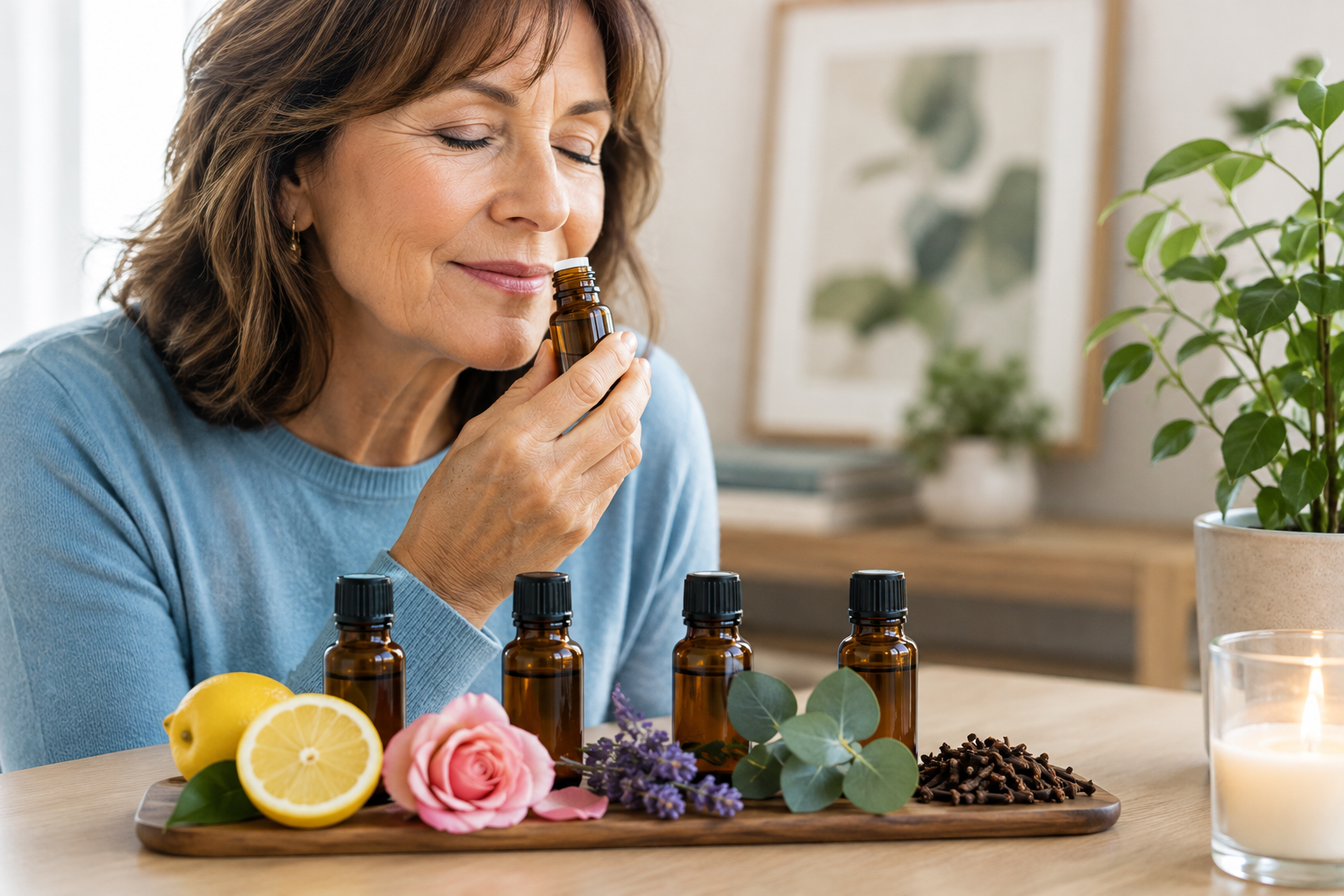
Smell training is a widely recommended method to enhance or restore olfactory function. It is relatively inexpensive, non-invasive, easily done at home, and without toxic side effects. It involves repeatedly sniffing a set of strong, distinct scents such as rose, lemon, eucalyptus, and clove for 15–20 seconds each, twice daily over several weeks or months. This process leverages neuroplasticity, allowing the brain to rebuild damaged olfactory pathways and improve scent recognition. Research and clinical studies suggest using four main scent categories for smell training:
Fruity: Lemon, orange, or other citrus fruits
Floral: Rose, jasmine, or lavender
Spicy: Clove, cinnamon, or vanilla
Resinous: Eucalyptus or menthol
These scent categories were chosen to provide a diverse range of olfactory stimuli, making it easier to differentiate and recognize odors. Consistency is the key: using the same group of scents daily and focusing fully on each aroma with intention, enhances effectiveness. For instance, if you are smelling the Lemon essential oil, try to remember what a lemon used to smell like, imagine an actual lemon; the color, and shape while concentrating on the smell.
Smell training, also called olfactory training, is a therapeutic approach designed to help people regain their sense of smell after conditions like viral infections (including COVID-19), anosmia, hyposmia, or other olfactory impairments. It works by stimulating the olfactory system and leveraging neuroplasticity, encouraging the brain to rebuild lost or damaged connections in scent-processing areas.
During each session:
- Pick up one scent and hold it near your nose.
- Inhale gently for about 15 seconds while actively recalling what the scent used to smell like.
- Move to the next scent and repeat.
- Complete all four scents in one session, taking roughly one minute.
- Repeat once in the morning and once in the evening.
The mental effort to remember the scent is crucial, as it helps reorganize neural pathways in the brain, improving olfactory perception scienceinsights.org.
Benefits
- Restores smell function after illness or injury.
- Enhances flavor perception, improving appetite and enjoyment of food.
- Supports cognitive function and mood, as olfactory stimulation is linked to emotional and memory centers in the brain commonscent.org.
- Promotes neuroplasticity, helping the olfactory system rewire itself even after significant damage scienceinsights.org.
Practical Tips
- Use essential oils in small jars or vials for consistent scent exposure.
- Maintain a regular schedule and track progress in a journal to note improvements or challenges.
- Once familiar with the basic scents, consider adding personal or meaningful scents to keep the process engaging commonscent.org.
- Be patient: measurable improvements often appear after several weeks, with continued gains over months.
Smell training therapy is widely recognized as the most effective non-invasive method to reset and rehabilitate the sense of smell, offering a structured, evidence-based approach to olfactory recovery scienceinsights.org+1.
Other ways to improve your sense of smell:
- Pay attention to everyday smells: Actively noticing and describing odors in your environment can strengthen your olfactory awareness.
- Exercise regularly: Physical activity may improve circulation and brain function, which can sharpen your sense of smell.
- Maintain hydration and nasal health: Keeping mucous membranes moist and using saline rinses can support olfactory receptor function, especially if congestion or allergies are present.
- Avoid harmful substances: Cigarette smoke, harsh chemicals, and pollutants can damage smell receptors, so minimizing exposure helps preserve and improve olfactory function.
- Nutrition: A diet rich in zinc, vitamin A, and antioxidants supports healthy olfactory and taste receptors.
Smell training is generally safe, but individuals with asthma, epilepsy, fragrance sensitivities, or pregnancy should consult a healthcare professional before starting. Essential oils should only be used for inhalation, not applied directly to the skin or ingested